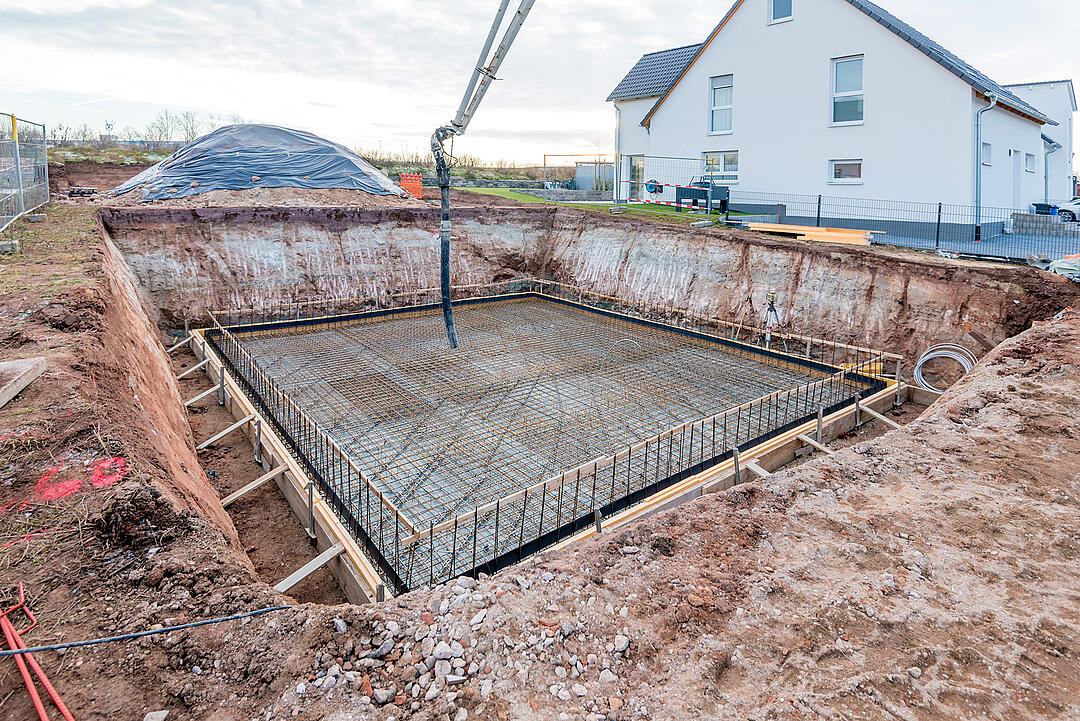
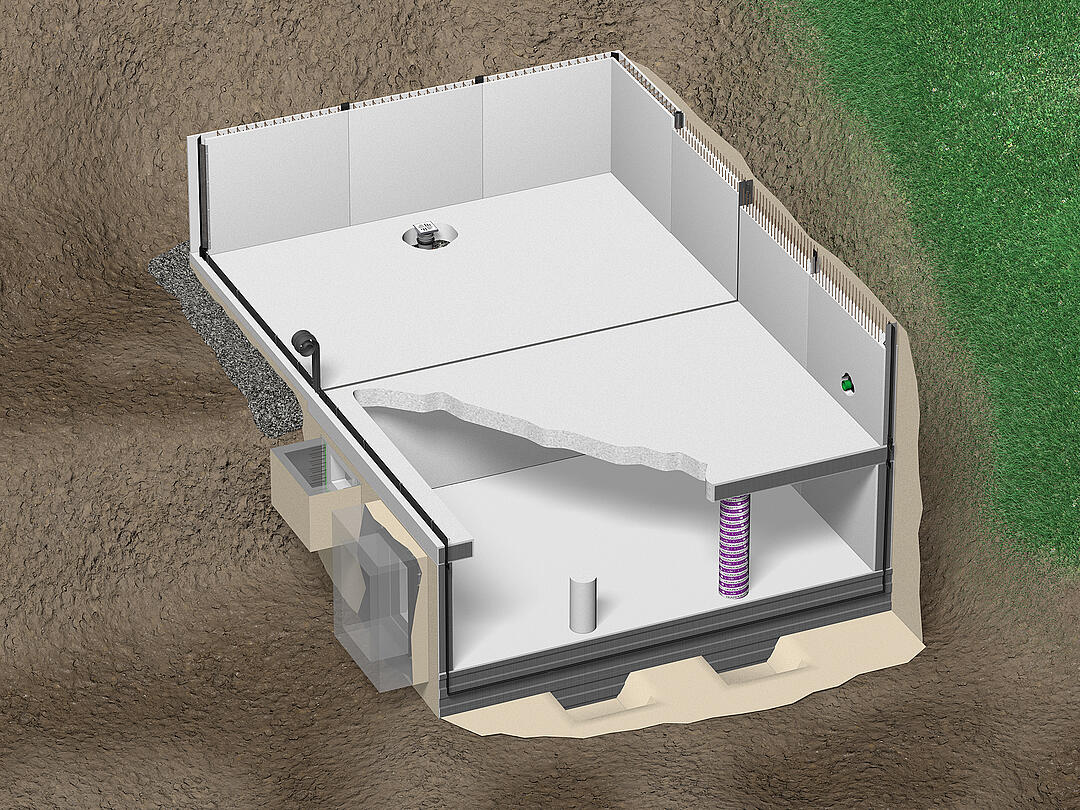
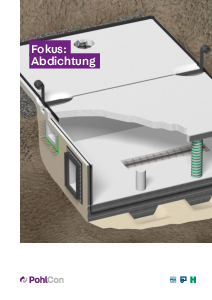
Weiße Wanne mit Bodenplatte, Kellerwänden, Fugenabdichtung und Rohrdurchführungen.
White tank – what is behind this construction method?
A white tank is a watertight reinforced concrete structure in which the floor slab and external walls in contact with the ground both provide structural support and act as a waterproof barrier. It protects, for example, basements in new-build properties from ground damp and rising groundwater. The basis is waterproof concrete: concrete with a high resistance to water penetration. Only when combined with professionally sealed joints, penetrations and a coordinated crack management strategy does a fully functional overall system emerge. The DAfStb guideline ‘Water-impermeable concrete structures’, or the WU Code of Practice for short, sets out the requirements for design and construction. Unlike the white tank’ the black tank uses an external waterproofing layer, for example made of bituminous or plastic membranes. The brown tank uses swellable bentonite for waterproofing.
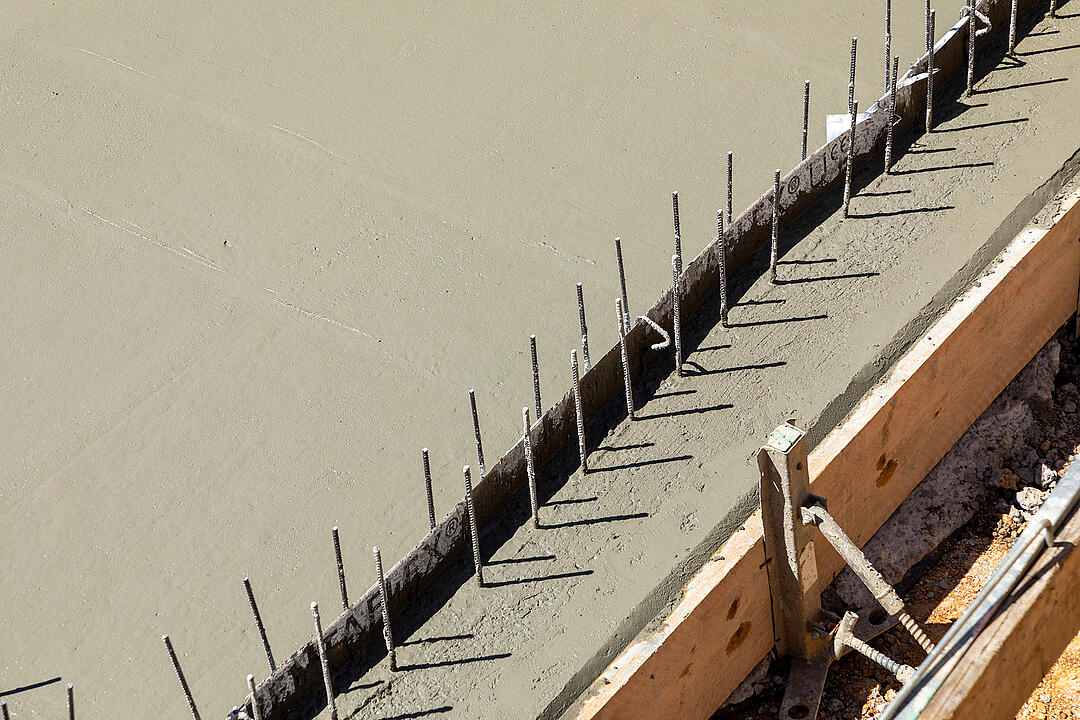
A freshly concreted floor slab with a protruding KUNEX® joint tape.
Suitable waterproofing systems for your white tank
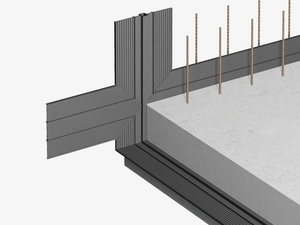
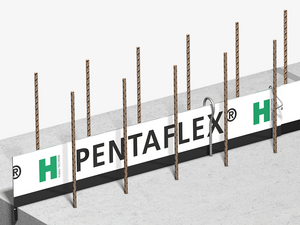
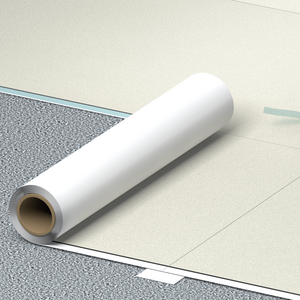
To ensure long-term effectiveness of basement sealing, all transitions and connections must fit together seamlessly. PohlCon offers PENTAFLEX® joint sheets and KUNEX® joint tapes, as well as SWELLFLEX® swelling tapes and PLURAFLEX® injection hoses. In addition, there are specialised elements for controlled expansion joints, sound insulation joints and pipe penetrations. The selection depends on the type of joint, water exposure and the waterproofing concept. Crucial factors are suitable certificates of suitability and professionally executed connections between the systems. For special requirements, the SECUFLEX® fresh concrete composite system can complement the waterproofing structure as an additional surface waterproofing layer for the ‘White Tank Plus’.
Sealing joints and penetrations in a white tank securely
Joints and penetrations are crucial details in the sealing design of a white tank. Depending on their function, they must connect concrete pour sections, accommodate movement or route pipes securely through structural elements. PohlCon offers solutions tailored to these requirements – for continuous waterproofing from the floor slab to the basement wall.
Construction joints: How does the white tank remain watertight between concrete pouring stages?
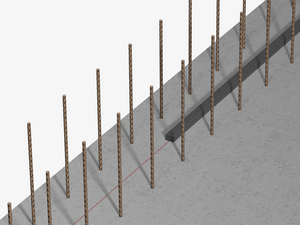
Construction joints occur between sections of concrete poured at different times, for example between the floor slab and the basement wall. The reinforcement runs through the joint; movement is not intended. PENTAFLEX KB® joint sheets or KUNEX® construction joint tapes seal these transitions. Depending on the design, SWELLFLEX® swelling tapes or PLURAFLEX® injection hoses may also be used.
Expansion and sound-insulating joints: How does the white tank take account of movement and sound insulation?
Expansion joints allow for movement between adjacent structural elements and are sealed using KUNEX® expansion joint tapes. Sound-insulating joints also serve to provide acoustic decoupling, for example between semi-detached houses. To this end, the PENTAFLEX® STK sound-insulating cage combines the separation of structural elements with an integrated KUNEX® sound-insulating joint tape for sealing.
Controlled cracks: How does the ‘white tank’ control crack formation?
Controlled cracking joints specifically weaken the concrete cross-section so that cracks form at designated points that have been sealed in accordance with the design. This helps to relieve internal stresses in a controlled manner. Suitable solutions include PENTAFLEX® OBS for in-situ concrete, PENTAFLEX® FTS for precast elements, or the KUNEX® star tube.
Feed-throughs: How are cables routed through the ‘White Tub’?
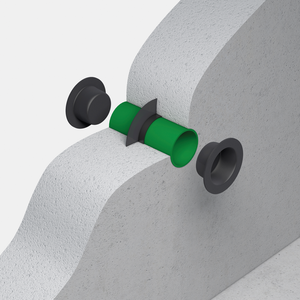
Penetrations are openings for pipes and service lines and require specific waterproofing details. PENTAFLEX® Transwand, lining pipes and floor penetrations, as well as KUNEX® wall collars, provide suitable solutions. In this context, both the connection to the concrete and the necessary waterproofing for the penetrating pipe must be taken into account.
A freshly concreted floor slab with a protruding KUNEX® joint tape.
From planning to execution: How to ensure a successful white tank
A reliable white tank begins with coordination between the client, the architectural and structural engineers, the ground investigation consultant and the contractors. A specialist white tank planner can assist with this coordination. Three key specifications form the basis:
- Usage class: What are the requirements for the basement rooms? Usage class A does not permit any damp patches caused by water ingress; usage class B allows for limited damp patches.
- Exposure class: The ground investigation report and design water level determine the classification: Class 1 for constant or intermittent water pressure, Class 2 for ground moisture and water running down walls.
- Design principle: The planning team determines how construction joints are to be avoided, limited or systematically sealed.
The choice of concrete, component thicknesses, reinforcement and joint planning are based on this. Professional concrete pouring, compaction and curing ensure the quality of the work. For basements used as living spaces, thermal insulation, ventilation and construction moisture must also be taken into account. PohlCon supports you in selecting suitable waterproofing solutions.
Sealing systems for the white tank
White tank – frequently asked questions about basement sealing
Is waterproof concrete in itself a white tank?
No. Waterproof concrete is the building material. It is only the planned overall structure – including joint sealing, penetrations and the crack management strategy – that constitutes the white tank.
Is C25/30 automatically waterproof concrete for a white tank?
No. C25/30 refers to the compressive strength class. High resistance to water penetration must be specified as an additional requirement and ensured by using a suitable concrete mix.
Does a white tank require additional external sealing?
In principle, the waterproof construction provides the sealing. Additional surface waterproofing may be advisable depending on the specific project; joints and penetrations must always be waterproofed separately.
How much does a white tank cost in a new-build?
Flat-rate prices per square metre are not very meaningful. The costs depend, amongst other things, on the size of the basement, water exposure, the thickness of structural elements, reinforcement and waterproofing details. A reliable estimate requires detailed planning.
What specifications must be in place before detailed planning of a white tank begins?
The basis for this is the agreed usage class, the exposure class and the design water level. Building on this, the design principles and waterproofing concept are defined. Component geometry, concreting sections, reinforcement, joints and penetrations must be co-ordinated at an early stage. Accessibility for any subsequent waterproofing measures that may be required must also be included in the planning.
What criteria are used to select joint sealants for waterproofing systems?
The key factors are the type of joint, anticipated movements, water pressure, component geometry and construction method. In addition, the installation conditions and the proven scope of application of the product must be taken into account. For construction joints, for example, PENTAFLEX® joint plates or KUNEX® construction joint tapes may be suitable; movement joints require expansion joint tapes that are appropriate for the application.
How can joint sheets and joint tapes be combined to form a continuous waterproofing system?
Transitions must be designed as separate connection details and implemented using suitable system components. PENTAFLEX® FBA, for example, enables PENTAFLEX® joint sheets to be connected to KUNEX® joint tapes. Corners, junctions and changes of direction must also be taken into account. It is essential to have a continuous waterproofing system that includes all connection points.
What requirements does the white tank impose on the design of reinforcement and joints?
Reinforcement, joint seals and embedded parts must be positioned in such a way that the concrete can be fully placed and compacted. Adequate clearances and the required concrete cover are just as important as the secure fixing of the waterproofing elements. Particularly in the case of densely reinforced connections, the workability of the concrete must be checked as early as the detailed design stage.
When is it advisable to use injection hoses with a white tank?
Injection hoses enable the scheduled grouting of construction joints with a suitable grouting material. Depending on the waterproofing scheme, PLURAFLEX® can be used as a primary waterproofing layer or in conjunction with joint sheets and joint tapes. The routing of the hoses, the grouting sections and the accessible injection points must be determined prior to concreting.
When does a White Tub Plus offer advantages?
Additional surface sealing may be advisable in the case of particularly high-end applications or where components may be difficult to access at a later stage. The SECUFLEX® fresh concrete composite system complements the sealing structure and its joint sealing for this purpose. The scope, connections and intended level of protection of this additional measure should be agreed with the client at the stage when the sealing concept is being developed.
What evidence of suitability must be taken into account when sealing joints?
The test reports must cover the intended use of the product in question. In particular, the permissible water exposure, joint type, installation conditions and connection details must be checked. Watertightness achieved in a test does not automatically correspond to the water pressure permissible for the application. The relevant test reports and installation specifications are decisive.
Which interfaces require particular attention in the case of pipe penetrations?
The waterproofing between the penetration element and the concrete, as well as the waterproofing around the pipe passing through, must be planned together. Building services and structural engineers should coordinate the position, dimensions and reinforcement layout at an early stage. PENTAFLEX® lining pipes or Transwand elements and KUNEX® wall collars offer various solutions for this purpose, which should be selected according to the specific connection requirements.
Documents
de
ru
Sealing Focus brochure
Building waterproofing solutions from PohlCon
PDF
Choose languageChoose language
en
de
ru
PENTAFLEX® - Technical information
Technical information
PDF
Choose languageChoose language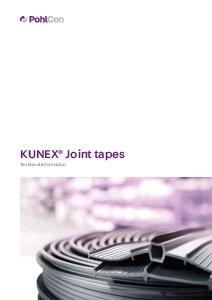
en
de
ru
KUNEX® Joint tapes - Technical Information
Technical information for KUNEX® PVC-P Joint tapes, TPE joint tapes, ABS construction joints, ABS expansion joints, clamp joints, star tubes, puddle flanges and formed parts and accessories
PDF
Choose languageChoose language
en
de
SECUFLEX® Pre-applied waterproofing system (FBVS) - Technical information
Technical Information
PDF
Choose languageChoose language
en
de
SWELLFLEX® Bentonite and rubber waterstop tapes - Technical Information
Technical Information
PDF
Choose languageChoose language
en
de
PLURAFLEX® Injection hose system - Technical Information
Technical Information
PDF
Choose languageChoose language